Sunday, May 12, 2013

The Great Gatsby

Last night I went to see the latest film adaptation of The Great Gatsby by Baz Luhrmann, starring Leonard DiCaprio, Carey Mulligan, and Tobey Maguire.

The Great Gatsby, written by F. Scott Fitzgerald, was published in 1925 and though it is now lauded as one of the greatest works in American literature, Fitzgerald died at the age of forty-four in relative obscurity. It is a commentary on the American dream and the Jazz Age as well as a story of love, dreams, and of our perceptions of the past. Nothing is what it seems.

The film has received some mixed reviews, most notably the article written by New York Times film critic A.O. Scott.  The book is very dear to many and it seems that it's most recent film adaptation is one that people either love, or love to hate. Film adaptations of books are never easy.

Personally, I loved it.

Its conception, its design, the costume, the cast... it drew me in and I was entranced. Yes, sometimes the sequences were near spastic in their presentation, but Luhrmann created a fresh and imaginative version of the film. Had he done otherwise, the film would have simply been another hum-drum version of its predecessors. I also feel Luhrmann did well in presenting the brilliance of Fitzgerald's writing. Though I knew the story before I saw the film (and that it always causes me much heartache) I still had to hide welling tears towards the film's conclusion.


“So we beat on, boats against the current, borne back ceaselessly into the past.”


Jordan & Nick


Myrtle’s Party


Nick’s Cottage


Nick & Gatsby


Jordan & Tom


Saturday, May 11, 2013

A designer and his muse: Piero Fornasetti and Lina Cavalieri


Here is something I've been fixated with for the last while. Throughout the 20th century, Italian designer Piero Fornasetti used the same face as the template for more than three-hundred and fifty designs which are instantly recognizable as his work. The iconic designs were transferred to everyday items such as dinner plates. Below, you'll see just a few examples of these designs, which I'm drawn to for their whimsy and imagination.

They're just wonderful!


The 19th century Italian opera singer Lina Cavalieri served as Fornasetti's muse after he encountered her image in an old French magazine. 

From the Fornasetti site, we learn Fornasetti's reasoning with keeping Cavalieri's face as his template for so many designs.

Lina Cavalieri’s face, explained Piero Fornasetti, was another archetype – a quintessentially beautiful and classic image, like a Greek statue, enigmatic like the ‘Gioconda’ and therefore able to take shape into the idea that was slowly building in his mind. It was this formal, graphic appeal (rather than Lina Cavalieri’s celebrity) that demanded such loyalty and inspired the spontaneous and ceaseless creativity of Fornasetti. For him, this face became the ultimate enduring motif.

And to see photographs of her, who could question him?

Hers is a beauty not easily forgotten. (And those clothes!!)


edwardianera:

via Beautiful Century
Lina Cavalieri, 1910s
[Submitted by agreyeyedgirl]


Picture of Lina Cavalieri


Friday, April 12, 2013

A bookworm gets an e-reader


Spring seems rather temperamental this year. Though the snow has melted here this last week has been very rainy and chilly, with some excellent thunderstorms, and so I've remained inside with some good books and a steaming mugs of tea.
 
My birthday was last week and my future parents-in-law got me an e-reader. I quickly became excited about it, even though I'm a fan of the 'ol paper copy books and I hadn't given much thought about owning an e-reader. What I'm particularly excited about is that I can "borrow" a great deal of e-books from my local library and most literary classics are available through Project Gutenberg (helllloooo JS Le Fanu, Alexandre Dumas, and Jane Austen!). It's a bookworm's dream.

There was, and still seems to be, a feeling of anxiety among many that e-readers are the undoing of the book industry. I don't know the figures, but I feel that book lovers will always keep buying paper copies of books. With libraries now lending out copies of e-books, it's yet another way they've maintained their relevance and importance within their community. 

Personally, if I read a book I love that I've come across digitally through my e-reader I'm still going to go out and buy a physical copy, because you never forget your first love and your first love is worth bringing home.


Monday, April 8, 2013

Leaping over puddles


It's that time of year that the snows are melting and we're all hopping over puddles. Here in Southern Ontario, spring is becoming less hesitant and seems to be asserting itself. It's a lovely feeling, to open the windows and let spring air freshen a sleeping, wintry house. The baby daffodils and tulips are reaching towards the sun. I've even started thinking of those summer clothes in storage.

Wednesday, April 3, 2013

Where I blog about my wedding


It was inevitable, all. I was bound to blog about my wedding at some time or another.

Besides, it's really beginning to dawn on me. Hubby and I are getting married in July... which is NOT THAT FAR AWAY!! Hurray!  We are getting married in a park overlooking lake Huron, followed by a Sunday luncheon in an old coaching in. It's going to be so much fun!

Everything's been a family effort so far and I couldn't be more grateful. Seeing as I'm enormously sentimental, I'll be wearing my mum's dress (a near dupe to the one shown here!), grandma Alice's pearls (worn by her, as well as my mum, on their wedding days - I get shivers thinking about it), and my future mother in law insists we visit a milliner to find a hat. Hubby's sister has been wonderfully generous and has found a suit for him (he looks so handsome, ladies). A friend of ours will be playing some music in the park for the ceremony and another friend will be the photographer. We are have wonderfully caring, talented family and friends, and couldn't be more fortunate to have them contribute to our wedding. 

We have an old-fashioned budget, so we're having an old-fashioned wedding and I wouldn't want anything else. We want to keep everything as simple as possible. So long as everybody has a good time, is well fed, and has a proper drink in their hand we'll be happy. Then, weather permitting *fingers crossed* we'll be off to the beach in the afternoon!

Friday, March 22, 2013

Love and excitement for the International Geek Girls Pen Pal Club


Boy oh boy am I every excited about this one folks! This is one of those things that happens every so often in the Land of Internet that perfectly demonstrates why I love social media and it combines two of my favourite things! Snail Mail and Geekery!

Emily Farqueharson and Darling Stewie founded the International Geek Girls Pen Pal Club. Any ladies over the age of thirteen can take part. When signing-up, you indicate what your top five geek loves (are you a Whovian? a Trekkie? a lover of all things Sailor Moon? or maybe the Lord of the Rings is more your thing), then Farqueharson and Darling Stewie will match you up with a fellow Lady Geek and you will both exchange post!  I believe there's a geek in all of us - the fun and imaginative part of us.

There's also good news and bad news - this is the project's first run, so unfortunately a limit of 1,000 people had to be set and it's been met.  The limit of 1,000 people was reached within a mere 3 days - 9 days before the sign-up limit date of April 1st! Fantastic!! And if you didn't manage to sign-up this time, despair not! They are going to do it again!

And who says regular post is dead? In my experience, a great deal of people still love receiving "real" mail from their friends and family. I know I keep a box of my correspondence and value it as much as any other treasures. Whenever I've lived (as I do now) in a province away from my family, my mother's always sent me a letter every week or so and it's special in a way that's different to phone calls, text messages or emails. I've also exchange post cards with fellow Tweeps, and just the other day a good friend of mine sent me a text message saying, "I've just sent you a letter - I'm feeling Jane Austen-y."

So there you go! Make sure to sign up on the second round of the International Geek Girls Pen Pal Club if you can and have fun!

Us girls have to stick together ;)

Thursday, March 21, 2013

Lines Written in Early Spring


I heard a thousand blended notes,
While in a grove I sate reclined,
In that sweet mood when pleasant thoughts
Bring sad thoughts to the mind.

To her fair works did Nature link
The human soul that through me ran;
And much it grieved my heart to think
What man has made of man.

Through primrose tufts, in that green bower,
The periwinkle trailed its wreaths;
And ’tis my faith that every flower
Enjoys the air it breathes.

The birds around me hopped and played,
Their thoughts I cannot measure:—
But the least motion which they made
It seemed a thrill of pleasure.

The budding twigs spread out their fan,
To catch the breezy air;
And I must think, do all I can,
That there was pleasure there.

If this belief from heaven be sent,
If such be Nature’s holy plan,
Have I not reason to lament
What man has made of man?

-William Wordsworth
1798

Tuesday, March 12, 2013

We are travelers

I love writing things down with pen and paper. I also love using Twitter as a way of sharing the fascinating and inspiring things I encounter throughout the day with others. Lately, I've thought about certain quotes or factoids I've shared in the past and though I know the information is still out there, I'd love to have access to these bits of information in paper form.  

For Christmas I received some beautiful notebooks from family and since then they've sat on my shelf for me to admire and dream about their future contents. Finally, I've decided that I'll begin a new journal of sorts - writing down the quotes and facts I encounter every day into these notebooks. 

To me, writing these things down is also a way of remember how spectacular life really is on a daily basis. It's so easy for the humdrum of responsibility and the pressures of everyday living to get us down and have us think that our lives are small., but by detailing what's exciting and fascinating in life we can be brought back to that utterly essential sense of curiosity and awe for the world that surrounds us. We are travelers through the universes of art, history, science, music, fashion, fauna, and film, and we should never forget this if it can be helped.

Tuesday, February 19, 2013

Friday, February 15, 2013

Sylvia Plath on Life

E6396fe6467077d99f5bb7780cf1-post_large


Life has been some combination of fairy-tale coincidence and joie de vivre and shocks of beauty together with some hurtful self-questioning.

The Bell Jar by Sylvia Plath

Thursday, February 7, 2013

Library Haul

I'm sure many of you well seasoned net surfers are already familiar with "Book hauls" and "Shopping hauls." Though I've encountered Library Hauls, I haven't seen them as frequently and so I've decided I'll begin posting what I bring back from the library as a Library Haul.

Here's my most recent one.

I love going to the library and taking my time perusing the stacks; not knowing what I'll come across is greatly thrilling. I remember the first times I went to my local library alone around the age of ten or so; the smell of books and the lovely solitude amongst the shade of the stacks is an experience that shaped who I am and what I love throughout life.

Though I'm keen on all the books I brought home with me, the "treasure" I found was "The Eldon House Diaries" which is a collection of the diaries of the former inhabitants of a local house and historical landmark called Eldon House (about which I must gush about here soon). The house was inhabited by a wealthy English-Canadian family and the diaries document a great deal about Victorian life. (I'm trying not to read it at present because apparently my fiancé has ordered it online for me, but it`s lost somewhere in shipping limbo, though the bits I have read are fascinating!)


(Tempted to cut out sunglasses from black construction paper for Keira Knightley.)


Wednesday, January 16, 2013

Science and Beauty: Victorian microscope slides

The beginning of the 19th century, saw significant advances in the study of the natural sciences as well as the burgeoning of the middle class during the Victorian era.  This new social class had some extra money to spend and leisure time and some sought to put together their own cabinets of curiosities. Now collecting specimens and conducting research was no longer a pursuit attainable only to the leisure classes. Going on excursions to collect specimens and putting together their own slides became a popular pastime for many people.


From The Illustrated London News, 1855

Some of these amateur naturalists added microscopes to their collections, as more affordable versions of the instrument were now being made with the development of industry.  Looking at slides was not only appealing to those interested in the natural world, but was also seen as a source of entertainment to both men and women, just like other pass times which became available to the middle class such as playing the piano.  

Advertisement in the Quarterly Journal of Science, 1875

The beauty of the slides is conveyed by both the slides themselves as well as the mounts. Mounts for the slides were decorated with coloured papers and ornate designs. The specimens found within the slides could come from back gardens or from around the world, the concept of "the exotic" being very much in vogue at the time. Some individuals, seeing the popularity of microscope slides, rose to the occasion and began producing slides for sale.

Below are some examples of sought after microscope slides made and collected by Victorians, as seen on the superb website www.victorianmicroscopeslides.com. I can really see why these slides are still sought after by collectors.  


The specimens below are shown as they appear under the microscope and are made with various materials such as scales or shell. These are beautiful examples of the appeal of viewing specimen slides for their colourful beauty.


It's spectacular how the natural world never ceases to inspire a sense of delight and wonder. 

What a beautifully human experience.

Friday, January 11, 2013

Most of my celebrity crushes are long deceased

 I've always been a history nerd and I spent some years as a history student, which meant I spent many hours with my head in previous centuries. I still do, really.  Naturally, I decided to compile a list of some of my favourite crushes* from the past. The general criteria seems to be: dark, brooding, rather handsome, obvious genius, tragic, not completely loony. I've also included a sample of their work which has moved me and remained important to me throughout the years. 

So here it is: my list of "Celebrity Crushes Long Deceased." 


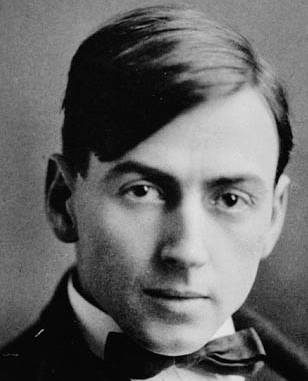
Dark and Mysterious: Tom Thomson

1877-1917

File:TomThomson23.jpg

Tom Thomson at Cauchon, c. 1916


Northern River
1915


The Pool
1915-16


The Headliner: Oscar Wilde

1854-1900


"I am so clever that sometimes I don't understand a single word of what I am saying." 

-

"Be yourself; everyone else is already taken."

-

"To live is the rarest thing in the world. Most people exist, that is all."


The Romantic: Frédéric Chopin

1810-1849

Frédéric Chopin


"I wish I could throw off the thoughts which poison my happiness. And yet I take a kind of pleasure in indulging them."

-

"It is dreadful when something weighs on your mind, not to have a soul to unburden yourself to. You know what I mean. I tell my piano the things I used to tell you."


The Young Tragedy: John Keats


            "I have been astonished that men could die martyrs for religion - I have shuddered at it. I  shudder no more - I could be martyred for my religion - Love is my religion - I could die for that."

-

"The poetry of the earth is never dead."


Tragedy certainly adds to the myth of the man once he's died (think of James Dean or Jimi Hendrix) and this factor can't be ignored when it comes to the men above. Nevertheless, the genius of these men holds its own regardless of their tragic tales. I suppose my romantic tendencies can't help but love these artists all the more because my imagination works at thinking about what else they would have produced had they lived longer.


To follow: a post about some women from history I admire!

*The notion of "crush" I have in mind when compiling this list is really the I love your brain and would follow you on Twitter if you were alive and you seemingly weren't a complete turd sort of crush, not the I have unhealthy delusions about you sort of crush. Voilà.

Monday, December 17, 2012

"Take the risk of thinking for yourself..." Christopher Hitchens, 1949-2011

Reflecting on the intellectual legacy left behind by a great orator and mind, a year after his death. 
Cheers, Hitch.


"Take the risk of thinking for yourself, much more happiness, truth, beauty, and wisdom will come to you that way."

Christopher Hitchens, 1949-2011

Wednesday, December 12, 2012

Books and stairs


Tumblr_liw7qqxh8f1qzhokmo1_500_large


"Books are no more threatened by Kindle than stairs by elevators." Stephen Fry


Thursday, November 22, 2012

November 22, 1928. Maurice Ravel's Boléro premieres at the Paris Opéra

Maurice Ravel's Boléro premiered at the Paris Opéra on this day in 1928.  Legend has it that during this performance a woman yelled "au fou!" ("he's mad!") before leaving.  When informed of this, Ravel said, "celle-là, vois-tu, elle a compris." ("that one, you see, she understood.")

Here's the Copenhagen Philharmonic performing Bolero at Copenhagen Central Station. As a flash mob.

Turn the volume up and annoy your neighbours!

Enjoy.

Tuesday, November 20, 2012

Furs and snow: The wintry paintings of Cornelius Krieghoff.

When I was visiting the Royal Ontario Museum about a month ago, I was struck by the work of a celebrated painter from North America`s past. Cornelius Krieghoff, born in Amsterdam, painted during mid-nineteenth century. He can best be recognized for his winter scenes and so the deeper we delve into the winter months, the more I felt the desire to share some examples of his work.

What seems to strike me most in Krieghoff's paintings is how much attention has been paid towards the objects in each scene.  Though the landscapes and people in Krieghoff's scenes are certainly beautiful in their romantic styling, the clothing, the furniture, and the textures are so finely painted that they demand the most attention from the observer.


An Officer`s Room in Montreal

I particularly love An Officer`s Room in Montreal. You can nearly feel the cushy softness of the fur blanket draped over the chaise by the fire, where you sit to gaze at the innumerable objects that add such coziness to the room, and scratch the friendly dogs absentmindedly after they've both wandered contentedly towards you and compete for your affection.  The room itself is dry and maybe a bit too warm, but it is a welcome relief from the outside cold.

This officer appears to be an intellectual member of the merchant class (or wishes to present himself as such). The room is a 'cabinet of wonders,' filled with items acquired through trade and travel, samples of his intellectual interests. The traps above his desk reveal the origins of his trade as a fur trader, and the various pelts, beaded boots, slippers, and mitts strewn about the room demonstrate his interactions with First Nations.  These boots, as well as the pair of snowshoes, have been warn - are not merely items for display - and so he also interacts with the land himself, he is not just a passive observer.  The room is both a demonstration of the European Enlightenment as well as of Canadian entrepreneurial spirit and colonialism of the time.


Cornelius Krieghoff born Amsterdam, The Netherlands, 1815; died Chicago, Illinois, United States, 1872
Calling the Moose, around 1860 oil on canvas, 27.0 x 21.5 cm The Thomson Collection © Art Gallery of Ontario
Calling the Moose
1860


Winter was one of Krieghoff`s favourite seasons to depict in his work. The people in his paintings were fur traders newly arrived from England and Scotland, French Canadians who had already been been part of the landscape since the seventeenth century, and First Nations peoples who had known the winters around the St-Lawrence since time immemorial.  He didn't just paint people in wintry scenes, he painted these people interacting with the landscape  They were as much a part of these landscapes as any hill, river, or tree. He painted these people working, travelling, interacting, and having fun with winter.


An Early Canadian Homestead
1859
The snow in these scenes managed to accentuate the bright colours and fine detail in the fabrics of the people, furs, trees, houses, tools, and decorations he so carefully painted. Krieghoff painted people who loved bright colours for their clothing and houses in the depths of winter.

I also love how his paintings are so animated. You can nearly hear the people in the paintings yelling to one another across a snowy yard, the winter wind blowing, the sound of crunching snow beneath mocassined feet, or a dog barking.  Krieghoff's paintings demonstrated how winter in Canada near the St-Lawrence could be great fun and stunningly beautiful or utterly difficult and nearly hellish.


The Trapper's Return
1861


File:'The Blizzard', oil on canvas painting by Cornelius Krieghoff, 1857, National Gallery of Canada.jpg
The Blizzard
1857

Not only did Krieghoff capture people living in the midst of winter, he captured the development of new social identities and was just as much a part of it as his subjects. The people in these scenes lived winter in such a way that it molded the way they viewed the world around them.  Their experiences during this time were neither strictly those of First Nations or strictly those of Europeans; these experiences were part of a burgeoning notion - of a new sense - of what it was to be Canadian.  Though the idea of what it means to be "Canadian" today is something quite complicated and the subject of ongoing study, a hint of its origins can certainly be found in the subjects of Krieghoff's paintings and how he chose to portray them. 

Interesting stuff.

Wishing you all the best over these winter months!

Tuesday, November 13, 2012

Thoughts on "The Life of Charlotte Brontë" by Elizabeth Gaskell


While perusing the stacks at my local library I found The Life of Charlotte Brontë by Elizabeth Gaskell, author of Cranford and North and South.  I'm quite a fan of all three of the Brontë  sisters (though admittedly I am particularly an admirer of Charlotte and of her novel Jane Eyre). I've already read a few contemporary books about the Brontë family, though I had not yet read Gaskell's biography of her close friend.  It was time to take it home and acquaint myself.


The Life of Charlotte Brontë was first published in 1857, a mere two years after the celebrated author's passing at the age of thirty-nine as the last of the six Brontë children.  It is the first biography of a female author, written by a female author in a time when it was still greatly questioned if it was even possible for a woman to formulate her own ideas and if so, was it acceptable or proper for this woman to make a living on these intellectual capabilities. The book and its conclusions are still being studied and debated by scholars (for instance, the anecdote of Patrick Brontë, the father, shooting a pistol out into the back yard to relieve his heightened emotions; did this really happen? why? was he as odd as he's made out to be?). Not only does the book provide great insight into the individual personalities and inclinations of Charlotte, Emily, and Anne, but it also plunges the reader into understanding the social climate and surrounding circumstances in which the sisters and Gaskell wrote and lived.  


Gaskell presents the Brontës as people with minds who shone despite great shadows. For instance, their lives were blighted by illness and the death of loved ones. Their health and spirits withered (especially Emily's) due to homesickness which surged whenever they had to leave their family home.  According to Gaskell, the sisters were also particularly shy or reserved in most social situations, though I suspect that their above-average intelligence had to be stoked by the selective company of equal minds and temperaments. Any substandard company seemingly left them to languish. It was in each other's company that they were strongest. When they were lucky enough to be at home which was the parsonage adjacent to the church where their father was minister, Charlotte, Emily, and Anne discussed their ideas in the evenings after the rest of the household had gone to bed. It was during this time that they supported one another, perfected their notions, and strengthened their resolves.

Tumblr_lugald63ca1qaho7oo1_500_large

The sisters are still famous today, though at the time I'm sure they were perceived as a bit odd. They were quite determined to be as self sufficient as possible in an age where intellectual options were limited for women. They dreamed of opening a small school together so they wouldn't have to take on employment which they hated (namely, being governesses) and could continue writing in the hope that someday their works could be published. The sisters also had their own ideas when came to the subject of marriage.  It was not expected for a woman to be yet unmarried by the age of twenty-five. Charlotte was once made an offer of marriage and, after declining the offer, wrote about the experience to a friend.

I had a kindly leaning towards him, because he is an amiable and well-disposed man.  Yet I had not, and could not have, that intense attachment which would make me willing to die for him, and if I ever marry, it must be in that light of adoration that I will regard my husband.

This is passage demonstrates how Charlotte couldn't bring herself to settle for someone she didn't adore.  It seems she couldn't let the circumstances or expectations of society drive away the values she held onto strictly throughout her life.  Charlotte felt that life couldn't be lived with only half-baked thoughts and tepid feelings. I love this.

The more one learns about the Brontës, the more one begins to understand just how much each sister's masterpiece is a projection of themselves. Many (though not all, sorry Cathy) of the heroines in their books carry the same values as did their authors. Charlotte, Emily, and Anne wrote books which still manage to captivate and inspire each new generation and it's evident that the authors were just as engaging as the books they wrote. 

I'll leave you with the following excerpt, taken from one of Charlotte's many letters which Gaskell chose to include in the biography. In this letter, Charlotte paints a beautiful image of her beloved sister Emily and how she was linked, heart and soul, to her beloved moors.

Tumblr_mb6m8ybpc31rnmc5so1_500_large

My sister Emily loved the moors. Flowers brighter than the rose bloomed in the blackest of the heath for her;--out of a sullen hollow in a livid hill-side, her mind could make an Eden. She found in the bleak solitude many and dear delights; and not the least and best-loved was--liberty. Liberty was the breath of Emily's nostrils; without it she perished. The change from her own home to a school, and from her own very noiseless, very secluded, but unrestricted and unartificial mode of life, to one of disciplined routine (though under the kindest auspices), was what she failed in enduring. Her nature proved here too strong for her fortitude. Every morning, when she woke, the vision of home and the moors rushed on her, and darkened and saddened the day that lay before her. Nobody knew what ailed her but me. I knew only too well. In this struggle her health was quickly broken: her white face, attenuated form, and failing strength, threatened rapid decline. I felt in my heart she would die, if she did not go home, and with this conviction obtained her recall. She had only been three months at school; and it was some years before the experiment of sending her from home was again ventured on.

Tuesday, November 6, 2012

Bleak autumnal evenings.


"Draw your chair up and hand me my violin, for the only problem we have still to solve is  how to while away these bleak autumnal evenings."

Sherlock Holmes to Dr. Watson in The Adventure of the Noble Bachelor.


It's been rather dark and dreary here lately and I've found that curling up with a Sherlock Holmes mystery, my tartan wool blanket, and a nice cup of tea do just the trick in fighting this autumnal chill.
It's been years since I've read the Holmes mysteries and I'm find them a great deal of fun to read.  What with all the BBC Sherlock mania (and discussions about the controversial Elementary) I decided I needed to brush up on the source of it all; the original stories! I love when treasured books and stories are brought to life on stage and on film, but I always prefer being familiar with the original literature.
Some of the Holmes stories are rather dark, some rather humorous, and some even have a shade of romance!   It's no wonder that these tales have remained so popular well over a century and continue to thrill and inspire people around the globe.

Which is your favourite Holmesian tale?